Notes on Vintage Gear

Pioneer
Pioneer SX-980
Pioneer SX-980
Overview
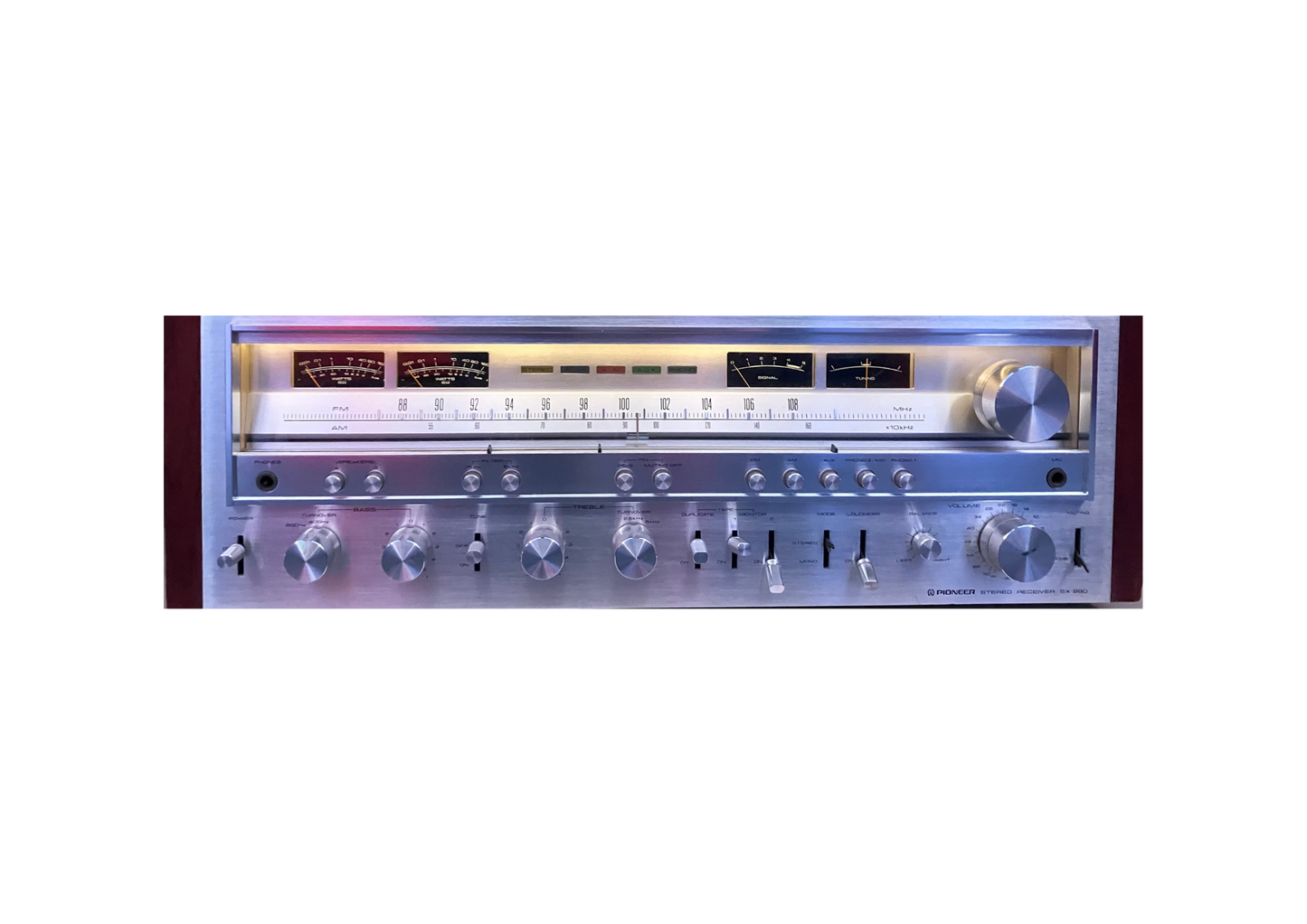
The Pioneer SX-980 is an 80-watt-per-channel AM/FM stereo receiver from Pioneer’s celebrated late-1970s lineup. Positioned above the SX-880 and below the larger SX-1080, SX-1280, and SX-1980, it delivered substantial real-world power without the enormous size and weight of the range-topping models.
Its amplifier is rated at 80 watts per channel into 8 ohms and 100 watts per channel into 4 ohms from 20 Hz to 20 kHz, with no more than 0.05% total harmonic distortion. Dual illuminated power meters, a wide analog tuning dial, wood-grain cabinet, and carefully organized controls give it the unmistakable look of Pioneer’s silver-face receiver era.
Why This Model Matters
The SX-980 occupies a particularly useful middle ground in the Pioneer family. It offers enough power for a wide range of vintage and modern speakers, along with the tuner, phono, tape, and speaker-routing features enthusiasts expect from a full-size receiver. For many systems, it delivers most of the experience of Pioneer’s larger models in a more manageable package.
Highlights
- 80 watts per channel into 8 ohms
- 100 watts per channel into 4 ohms
- Low 0.05% rated total harmonic distortion
- Dual analog power-output meters
- Two phono inputs and multiple tape connections
- Preamp output and power-amplifier input connections
- Classic silver face, illuminated dial, and wood-grain cabinet
Who It’s For
The SX-980 is a strong choice for someone seeking a substantial, highly recognizable Pioneer receiver without moving all the way into the giant-receiver category. It suits an analog-focused system, offers useful expansion options, and has the visual presence that makes late-1970s Pioneer equipment so appealing.

Couldn't load pickup availability